Gaʼsgöhsagöh State Park campaign
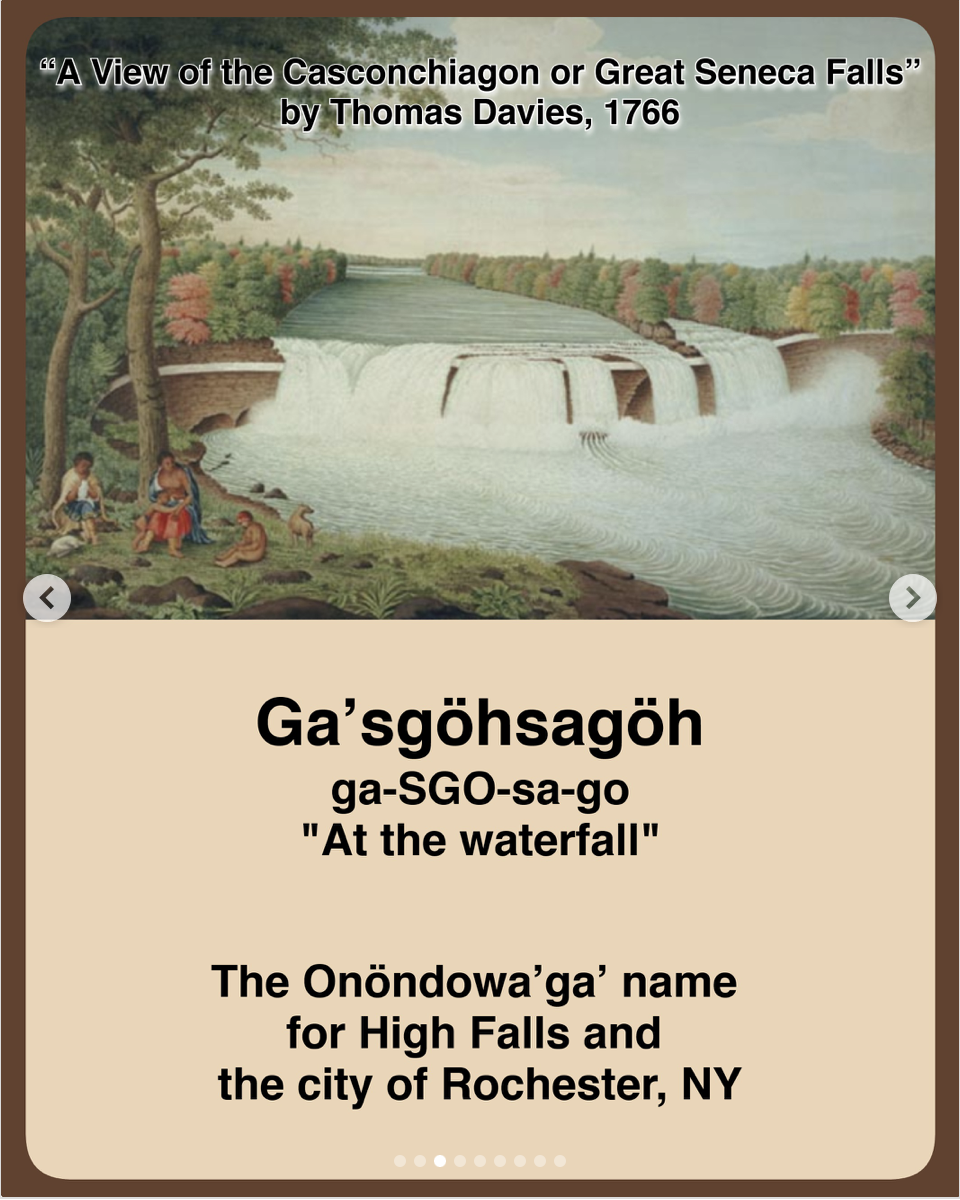
High Falls is Rochester’s principal geographic landmark. It’s where the village of Rochesterville was formed to harness the great power of the Genesee, turning the mills that made Rochester the Flour City. And for centuries upon centuries before that, it was home to the Onöndowaʼgaʼ (Seneca) people who lived along the gorge until their forced removal in the 19th century. Early settlers called it the Great Seneca Falls, but they also documented the falls’ Onöndowaʼgaʼ name, Casconchiagon, more accurately spelled Ga'sgöhsagöh in the modern Onöndowaʼgaʼ orthography. The name appropriately means “At the waterfall.” It is the Onöndowaʼgaʼ name not just for High Falls, but also for the city of Rochester itself.
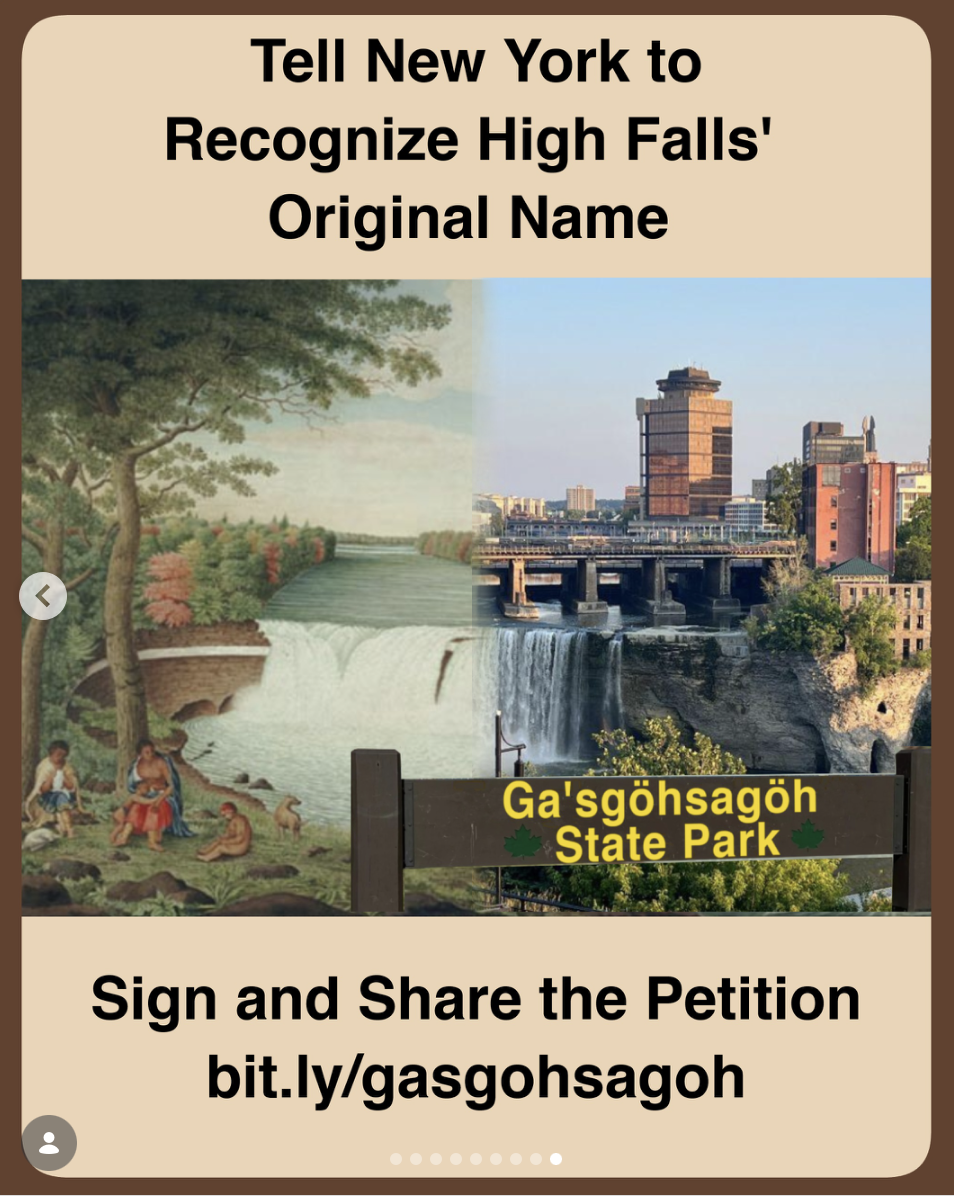
A new era is set to begin in the falls’ long history as New York State begins construction on High Falls State Park, a new 40-acre state park that will provide public access to the gorge for the first time in generations. Among the park’s stated goals is a commitment to honor and make visible the city’s cultural history. The development of Rochester’s first state park presents a rare and timely opportunity to restore visibility to Onöndowaʼgaʼ history and culture by naming this new park Ga'sgöhsagöh State Park.
Ga'sgöhsagöh is one of the few precolonial names in this area that has survived. This is remarkable, and it is worth celebrating. Ga'sgöhsagöh State Park differs from places like Seneca Park in that it doesn’t just appropriate the tribe’s incorrect name. It is an act of genuine recognition, honoring the Onöndowaʼgaʼ people’s enduring relationship with the land and water by using a name in the Onöndowaʼgaʼ language itself.
High Falls State Park is still in development. There are no signs to replace, no established identity to disrupt. This is the ideal moment to get this right from the beginning. It costs nothing and requires only the will to do it.
Will there be a learning curve? Probably. But it didn’t take long for the Rochester community to embrace the Freddie-Sue moniker after the 490 bridge was renamed in 2007, and it’s since become an iconic landmark and a source of civic pride. Ga'sgöhsagöh additionally benefits from being easy to pronounce, spoken much as it is spelled: ga-SGO-sa-go.
Learning, after all, is the point. How many Rochesterians know that their city has an Indigenous name? How many Rochesterians have heard a single word of Onöndowaʼgaʼ spoken? Almost none. For too long, Rochester's Indigenous heritage has been largely ignored, suppressed, and misrepresented. By adopting an accurate name provided by Onöndowaʼgaʼ language keepers, we would be doing something unprecedented in Rochester. Ga'sgöhsagöh State Park can be a space where the record is finally set straight.
------------------------------------------------------
Endorsed by:
Indigenous Peoples' Day Committee of Rochester
Genesee Land Trust
Rochester Mutual Aid Network
Rochester City Councilmember Mary Lupien
------------------------------------------------------
NEXT STEPS
------------------------------------------------------
1 - Email & Call Your Reps:
Assemblymember Demond Meeks — meeksd@nyassembly.gov | 585-454-3670
Assemblymember Sarah Clark - clarks@nyassembly.gov | 585-467-0410
Assemblymember Harry Bronson - bronsonh@nyassembly.gov | 585-244-5255
State Senator Jeremy Cooney - cooney@nysenate.gov | 585-225-3650
State Senator Samra Brouk - brouk@nysenate.gov | 585-223-1800
2 - Share & Sign the Petition 🙏